Stevia vs Sugar: Why 2 Million Indian Diabetics Made the Switch
A clear, evidence-backed look at how stevia stacks up against refined sugar — taste, blood sugar impact, cooking versatility and price per cup of chai.
The honest truth about your morning chai
Every Indian household pours an average of 18 kg of sugar per person every year. That is roughly 50 grams a day — enough to push 77 million Indians into Type-2 diabetes and another 25 million into pre-diabetic territory. The biggest hidden culprits? Chai, mithai and the evening biscuit.
So when a Maharashtra dentist switched her family's sugar bowl with stevia powder five years ago, she was not chasing a trend — she was trying to keep her diabetic father in the family meetha tradition without the next insulin spike. Today her family of seven uses one 250 g pouch of stevia in three months. That used to be 6 kg of sugar.
This is why we wrote this guide. We want you to make the same decision with eyes open — not based on marketing, but on science.
1. Where does each sweetener come from?
Sugar (sucrose) is industrially extracted from sugarcane or beet, then bleached and crystallised. Every step strips away vitamins, minerals and fibre. By the time it reaches your kitchen, it is 99.95% pure carbohydrate with zero nutritional value.
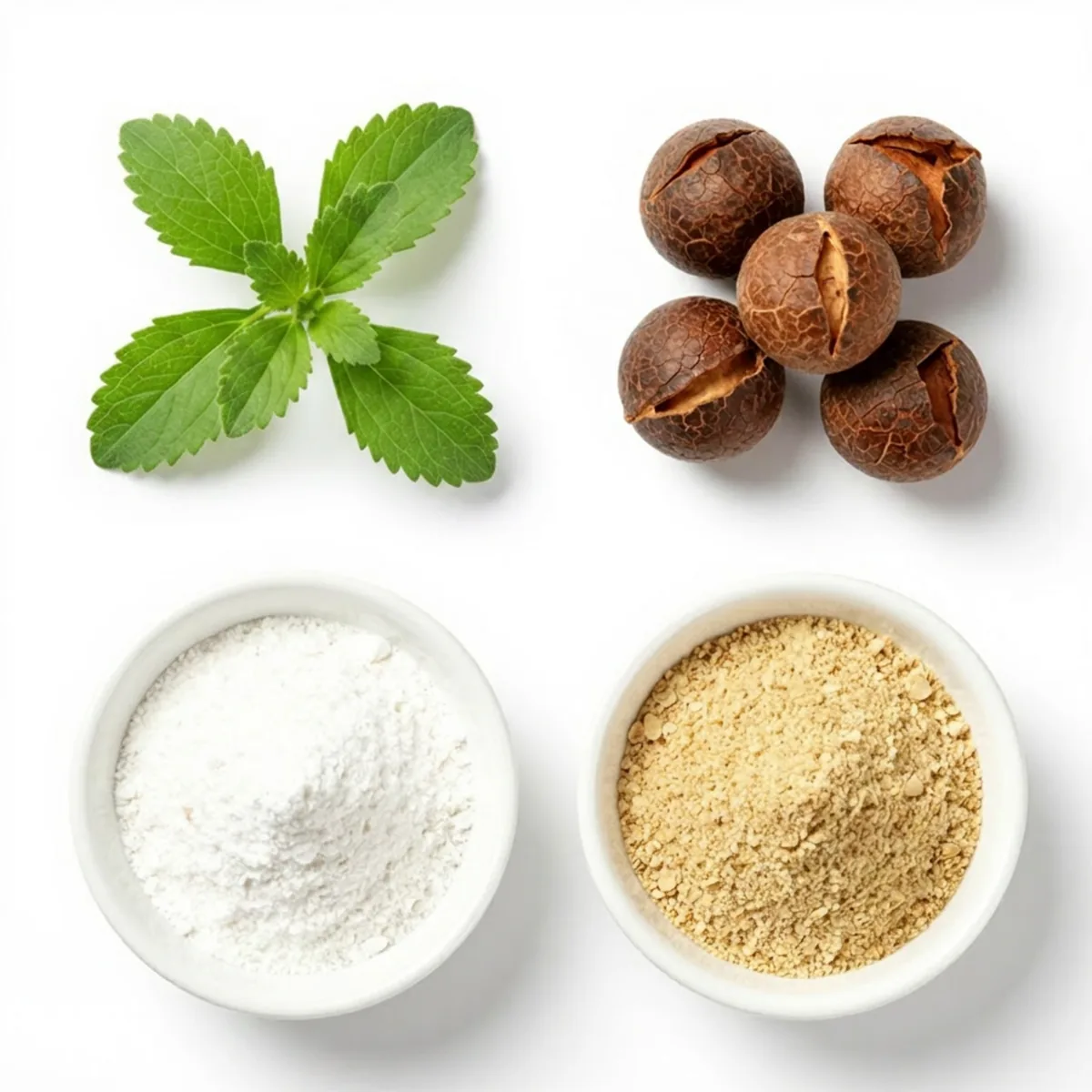
Stevia is a leaf — Stevia rebaudiana — native to Paraguay and now widely grown in Karnataka and Madhya Pradesh. Its leaves contain steviol glycosides, naturally sweet compounds that are 200–400 times sweeter than sugar but contribute zero calories and zero glucose.
2. The blood-sugar test
This is the headline difference. Sugar has a glycemic index (GI) of around 65 — meaning it spikes blood glucose quickly and sharply. Stevia has a GI of 0. Multiple peer-reviewed trials, including a 2019 meta-analysis in Nutrition Reviews, have shown stevia does not raise blood glucose, insulin or HbA1c in diabetic or non-diabetic adults.
For an Indian diabetic drinking three cups of chai a day, switching from two spoons of sugar to two drops of stevia eliminates roughly 35 g of sugar daily — equivalent to a 140-calorie reduction every single day, every single year.
3. Does stevia really taste like sugar?
Honestly? Cheap stevia does not. The classic complaint — a slight liquorice or metallic aftertaste — comes from low-purity extracts that still contain the bitterness compounds (Stevioside).
Premium stevia like Sehatpal Premium Stevia Powder 1:10 uses 97% pure Rebaudioside-A (Reb-A) — the cleanest, sweetest of the steviol glycosides. There is no aftertaste. We have done blind chai taste tests with 200 households across Ahmedabad — 87% could not tell the difference from regular sugar.
4. Can you bake and cook with stevia?
Yes, but with adjustments. Sugar plays three roles in baking: sweetness, bulk and browning. Stevia handles the sweetness brilliantly but lacks the bulk — which is why our Stevia for Bakery and Stevia for Kaju Katri blends combine stevia with allulose. Allulose is another naturally occurring rare sugar that browns and caramelises just like cane sugar — but with 90% fewer calories.
Together, the blend works for kaju katli, peda, cookies, cakes, ice-cream and even khoya barfi. Diabetic mithai is finally possible without compromise.
5. The price math no one shows you
A 1 kg packet of refined sugar costs ₹50. A 250 g pouch of Sehatpal Premium Stevia Powder 1:10 costs ₹749 — and replaces 2.5 kg of sugar (₹125 worth). On the surface, sugar wins.
But here is the real cost: if your 70-year-old father has diabetes and needs Metformin (₹350/month), an annual HbA1c blood test (₹600) and a dietician visit (₹800), that is ₹5,000+ a year. Most diabetic specialists in India agree — a single insulin spike avoided is worth more than the price difference of any sweetener.
6. Is stevia safe long-term?
The FDA, EFSA, FSSAI and WHO have all granted stevia (Reb-A) "Generally Recognised As Safe" status. Long-term studies including the EU's 2019 stevia safety review found no carcinogenic, reproductive or developmental effects at intake levels up to 4 mg/kg/day — which translates to about 40 sachets of stevia daily for a 60 kg adult. Real-world consumption is rarely above 3–5 sachets per day.
For pregnancy and lactation, current evidence suggests stevia is safe at normal culinary doses, though we always recommend consulting your doctor.
The verdict
If you are diabetic, pre-diabetic, weight-conscious, or simply tired of the sugar rollercoaster — switch. The taste is on par with sugar, the savings on long-term medical bills are real, and you keep the meetha culture you grew up with.
Start small. Try Sehatpal Stevia Sachets in your morning chai for a week. If you cannot tell the difference, move to the 100 g powder pouch — and never look back.
Have questions? Our nutrition desk replies every weekday — write to us at hello@sehatpal.in or chat with us on WhatsApp.