High-Intensity Natural Sweeteners Explained — Stevia, Monk Fruit & the Science of Sweetness
What makes stevia 300× sweeter than sugar and monk fruit 250× sweeter — and why a single gram replaces a kilo of refined sugar. A clear explainer for diabetics, dieters and curious cooks.
What does "high-intensity" actually mean?
When food scientists describe a sweetener as high-intensity, they mean a single ingredient that is at least 30–50 times sweeter than table sugar — and usually delivers that sweetness with little or no calories. Stevia, monk fruit, sucralose, aspartame and saccharin all fall into this family, but only stevia and monk fruit are plant-derived and naturally non-caloric. Those are what we will focus on today.
A pinch of high-intensity sweetener can replace several spoonfuls of sugar. That is why a 100 g Sehatpal Stevia pouch lasts a family of four close to four months, while a 1 kg pack of sugar disappears in two weeks.
Stevia — the Paraguayan leaf that changed Indian kitchens
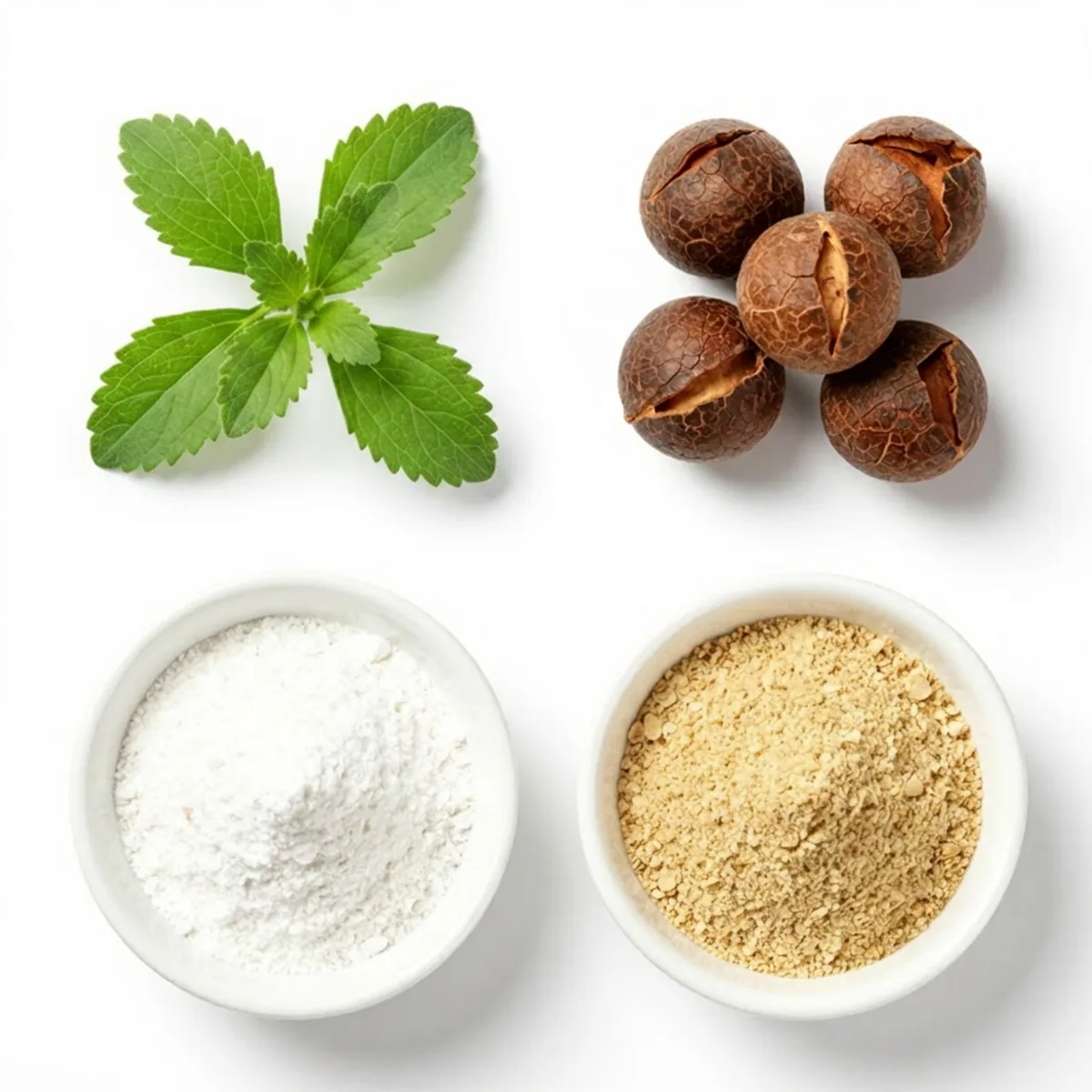
Stevia rebaudiana is a small herb native to South America. The Guaraní people of Paraguay have used its leaves for over 1,500 years as "ka'a he'ê" (sweet herb). What makes stevia sweet is not sugar — it is a family of compounds called steviol glycosides, of which two matter most:
- Stevioside — 200× sweeter than sugar, slightly bitter aftertaste at high doses
- Rebaudioside-A (Reb-A) — 300× sweeter, the cleanest tasting glycoside, virtually no aftertaste
Cheap stevia products use crude extracts heavy in stevioside (which is why they taste metallic in chai). Premium stevia like Sehatpal Stevia Powder 1:10 uses 97% Reb-A — the sweetest, cleanest glycoside the plant produces. The result is a sweetness profile that even professional dietitians cannot distinguish from sugar in blind taste tests of milky tea and coffee.
Stevia has been studied for over 50 years. Globally, the WHO JECFA, EFSA, US FDA and FSSAI have all approved steviol glycosides as safe (GRAS) at intake levels up to 4 mg/kg/day — about 10 sachets per day for a 60 kg adult.
Monk fruit — the Buddhist monks' melon
Across the Himalayas in southern China grows Siraitia grosvenorii, a small green melon known as luo han guo (罗汉果) or "monk fruit". Buddhist monks in Guangxi have used it as a cooling tonic for centuries.
What makes monk fruit sweet is a class of compounds called mogrosides — particularly mogroside V, which is 250 times sweeter than cane sugar. Like stevia, mogrosides are not absorbed by the body, so they contribute zero calories and have zero impact on blood glucose.
Monk fruit's biggest advantage over stevia is its taste profile — clean, slightly fruity, no aftertaste, no liquorice note. The catch: it is expensive. Monk fruit is fragile, hard to cultivate outside China, and demands very careful extraction. A premium monk-fruit product like Sehatpal Monk Fruit 1:2 with Allulose typically costs 30–50% more than stevia equivalents.
Side-by-side at a glance
| Property | Stevia (Reb-A) | Monk Fruit (Mogroside V) | Refined Sugar | |---|---|---|---| | Source | Stevia rebaudiana leaves (Paraguay, India) | Siraitia grosvenorii fruit (China) | Sugarcane / beet | | Sweetness vs sugar | 200–300× | 150–250× | 1× | | Calories | 0 | 0 | 4 kcal/g | | Glycemic Index | 0 | 0 | 65 | | Aftertaste | Slight (in low-purity products) | None | None | | Cost per cup of chai | ~₹0.04 | ~₹0.06 | ~₹0.30 | | FSSAI/FDA status | GRAS | GRAS | Approved | | Best use case | Daily chai, coffee, lemonade | Coffee, tea, lassi for sensitive palates | Anything (with the calorie cost) |
Why high-intensity sweeteners cannot bake on their own
Sugar plays three roles in baking — sweetness, bulk and browning. A teaspoon of sugar weighs ~4 grams; the same sweetness from stevia is just 0.013 grams. The volume and texture vanish. Your cake batter ends up too liquid, your cookies do not crisp.
This is why every serious natural-sweetener brand offers blends for baking. Our blends combine high-intensity sweeteners with bulking agents (the topic of our next blog) to mimic sugar's behaviour in cakes, cookies, kaju katli, peda and ice cream. The Sehatpal Stevia for Bakery and Stevia for Kaju Katri premixes are formulated exactly for this.
How to start using high-intensity sweeteners today
- Day 1: Replace half the sugar in your morning chai with one Sehatpal Stevia sachet.
- Day 7: Switch fully — drop the sugar.
- Day 14: Try monk fruit drops if you find stevia faintly herbal.
- Day 30: Use a Sehatpal Bakery pre-mix to bake one sugar-free dessert.
In four weeks the average household saves roughly 1.2 kg of sugar (and 4,800 calories per person). Over a year that is 15 kg of refined sugar avoided per person — and a measurable drop in HbA1c levels for diabetic family members, as several Indian endocrinologists have documented in small cohort studies.
The bottom line
If you are diabetic, pre-diabetic, or simply tired of the sugar rollercoaster, high-intensity natural sweeteners are the easiest single switch you can make. Start with premium stevia, escalate to monk fruit if you want the cleanest taste, and look for blends when you bake.
Want help picking? Send our WhatsApp team a quick message — tell us how much sugar you currently use and what dishes matter most. We will recommend a starter kit within an hour.